Qevlar AI

Paris, France — 17 September 2026
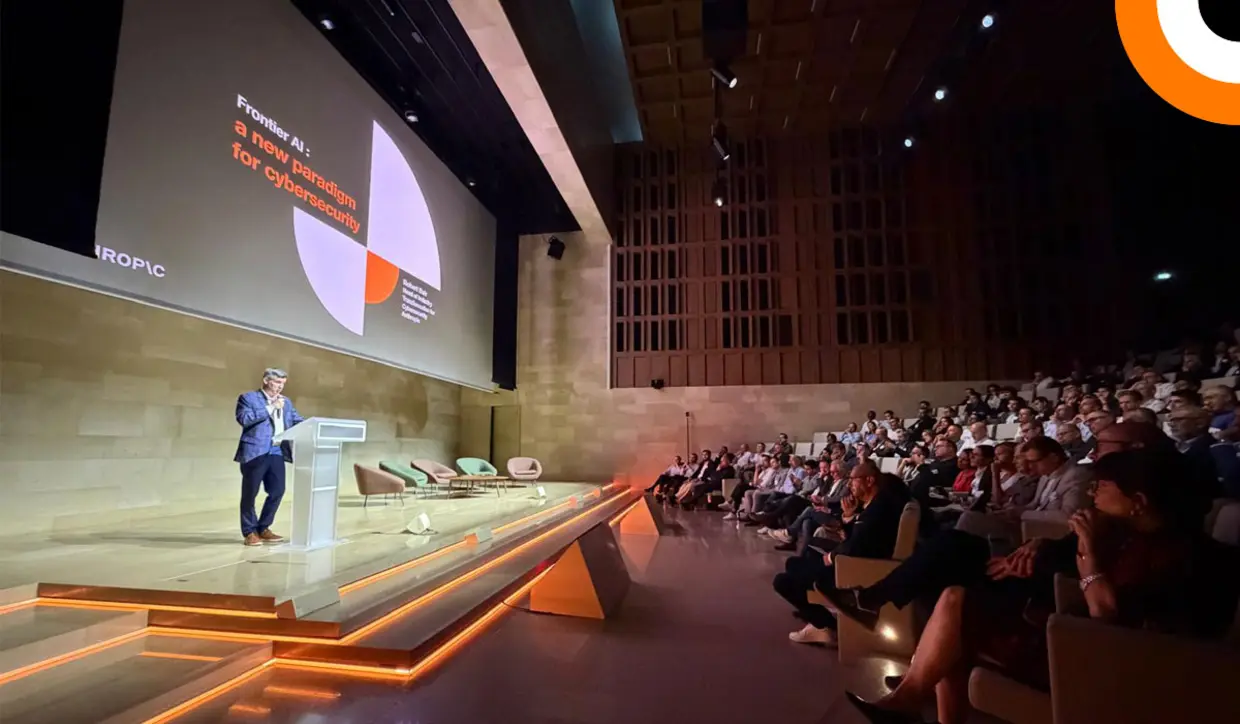
Qevlar AI joined alongside Anthropic and Sodexo an invitation-only Orange Cyberdefense event in Paris on 17 September, where 200+ security professionals gathered to discuss what frontier AI models change for attackers and defenders.
The evening brought together three perspectives that rarely sit on the same stage: the people building frontier models, the people running a global security practice, and the people putting AI into daily SOC operations.
.jpg)
.jpg)
Robert Bair, Head of Cyber and National Defense at Anthropic, described what Anthropic observes directly: AI is lowering the expertise, time and effort an attack requires, and more capable groups are already using it across much of the kill chain. When routine operational work can be handed to a machine, attackers scale wider and reserve human attention for the parts that need it.
Qevlar AI's position is that defense has to work the same way. AI takes the repetitive investigation and qualification work; analysts spend their time on the cases where judgment decides the outcome.
Orange Cyberdefense and Sodexo described how that split is already running in production with Qevlar. Alerts are investigated and qualified autonomously, with full reasoning attached, and analysts pick up the cases that matter instead of triaging a queue.
.jpg)
Ahmed Achchak, CEO of Qevlar AI, used the session to set out where the company is taking the model next: Qevlar Watchers, continuous monitoring tied to known vulnerabilities, with detections that adapt as exploit intelligence changes.
"Most SOCs are still measured by how fast they react. That ceiling is set by how many analysts you can hire, and nobody is winning that race," said Ahmed Achchak, CEO of Qevlar AI. "What we showed is the other path: let the AI do the investigation work end to end, so your team moves from clearing a queue to actually getting ahead of what's coming."