The autonomous SOC that runs end to end, with zero playbooks
Qevlar takes every alert from trigger to verdict on its own. No playbooks to script, no analyst stuck watching the queue. Your team steps in only for the calls that need a human.
Live in production at 1,500+ organizations globally















An autonomous SOC that clears the queue around the clock
3 min
average time to investigate, fully autonomous
Up to 80%
of tickets closed without a human
24/7
unattended investigations
100%
of alerts worked, never sampled
Most SOCs stop the moment your analysts clock out
Traditional SOCs depend on people being awake to work the queue. SOAR added automation, but only inside playbooks someone wrote in advance, for scenarios someone already imagined. Anything new, or anything at 3am, still waits for a human.
So coverage tracks headcount and shift patterns, not threat volume. Nights, weekends, and the long tail of unusual alerts are where things slip. The work does not stop when your SOC analysts go home, but the response usually does.
What makes a SOC autonomous
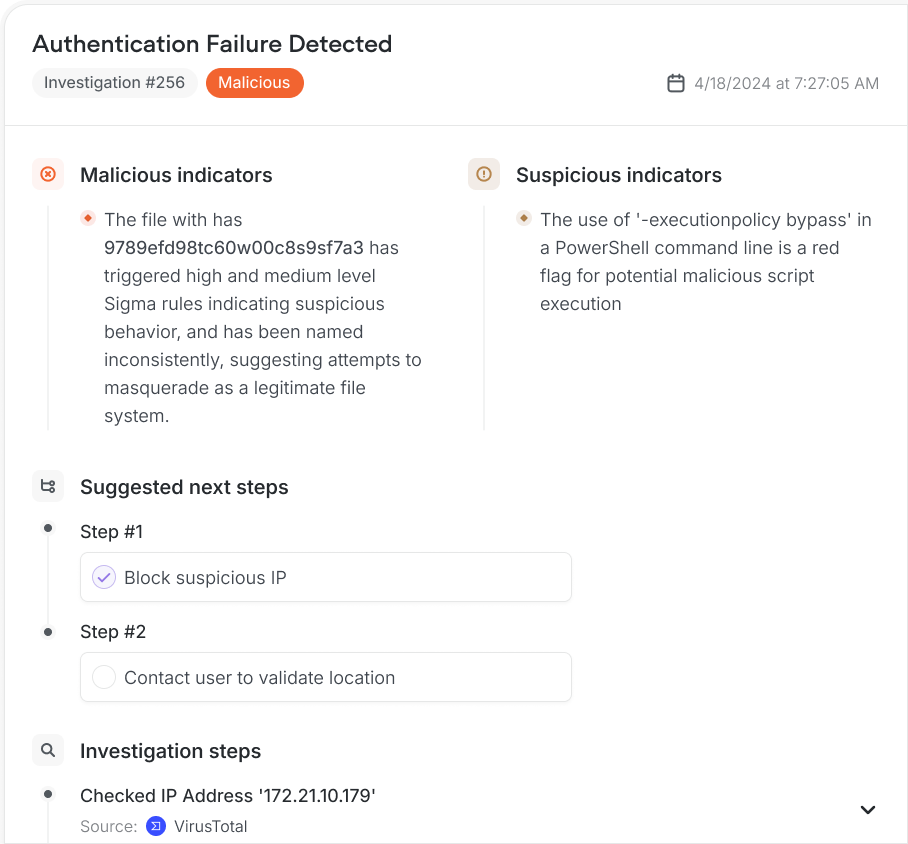
Automation runs steps. Autonomy makes decisions. A SOC is autonomous when it can take an alert from trigger to verdict with no human starting it and no playbook telling it what to do. Qevlar pulls and enriches the data, follows the investigation wherever it leads, and reaches a verdict: malicious, benign, or inconclusive. No analyst kicks it off. No one scripts the path in advance.
All
Autonomy without reliability is a liability
If a system is going to run unattended, every decision has to be one you can stand behind. Many tools chase autonomy by handing the whole investigation to a large language model. That trades control for unpredictability: the same alert can get different answers, and no one can explain why. Autonomy is only worth having when the engine behind it is consistent and auditable, every single time.
All



Full autonomy, full accountability
Letting a SOC run unattended only works if you can trust every step it takes. That is why Qevlar does not hand the investigation to an LLM. The core is a deterministic graph orchestrator that follows the same reasoning path every time, so the same alert always gets the same rigor. LLM agents handle only bounded tasks like enrichment and reporting, never the verdict. Every decision is explainable, every investigation sharpens the next, and Qevlar never trains on your data. It is the same engine behind our AI SOC, here doing the night shift on its own.
"We can now detect threats more quickly and accurately, while focusing our analysts' expertise on the most complex and critical incidents."
Frederic Zink, Managing Director France, Orange Cyberdefense
Running autonomously at 1,500+ organizations
Proven running unattended. Recognized across the industry.
Independent awards and live deployments show what Qevlar's autonomy delivers in real SOC operations.




From trigger to verdict, on its own
Step #1
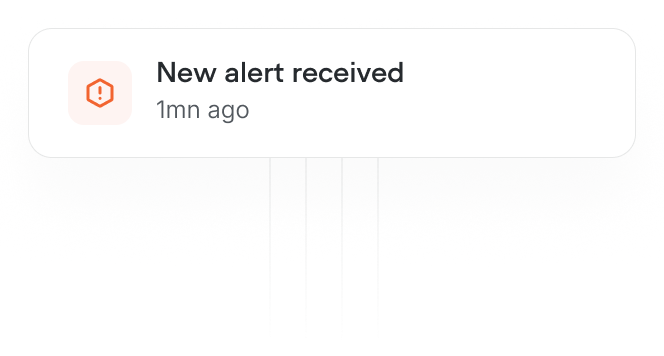
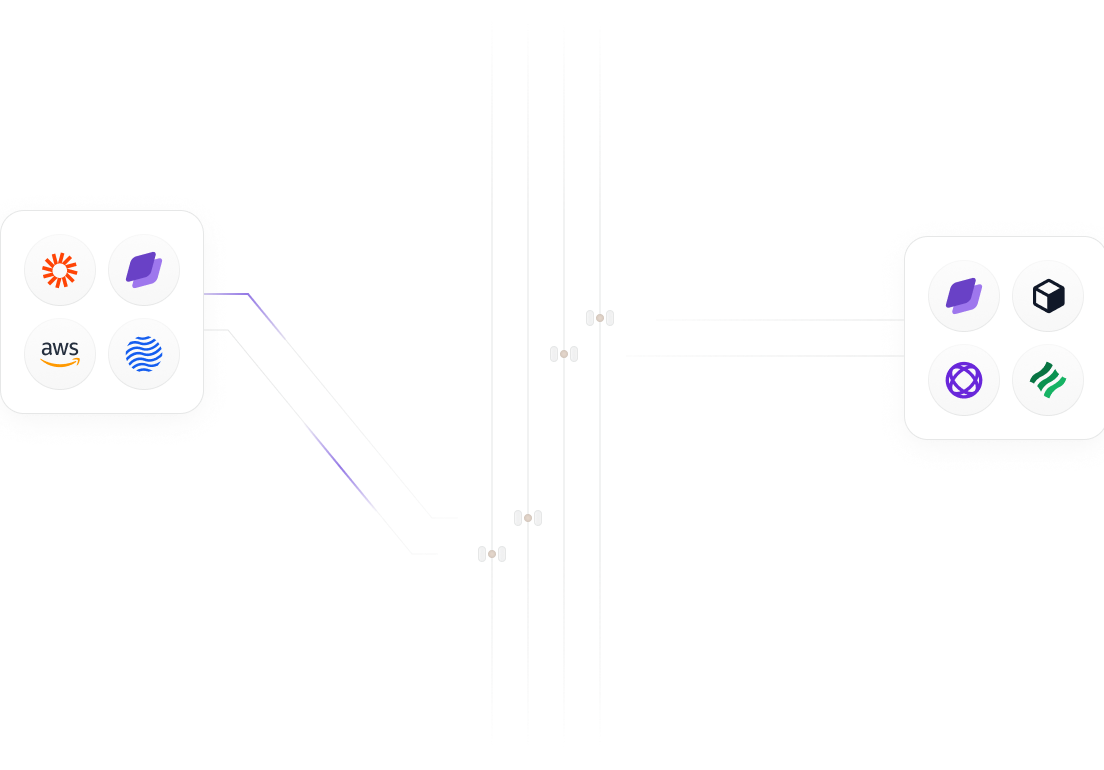
Investigate. The moment an alert fires from your SIEM or EDR, Qevlar starts on its own. It pulls, enriches, and analyzes data from internal and external sources, with no analyst kicking it off.
Step #2
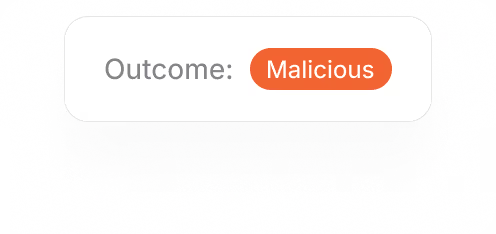
Conclude. Qevlar reaches a verdict on whether the alert is malicious, writes a full report, and suggests remediation. No playbook required, no human in the loop.

Step #3
Decide. Your analysts only review what was flagged malicious. They validate the outcome and act on the suggested steps, spending their time on decisions, not triage.

Autonomous SOC vs traditional SOC vs SOAR
SOAR automates inside playbooks you build. An autonomous SOC decides on its own, with no playbook. The two stay complementary. More on what a SOAR is.
Capability | Traditional SOC | SOAR | Qevlar AI SOC |
|---|---|---|---|
Runs end to end with no human input |  Analyst-driven |  Within playbooks |  Yes |
Handles alerts it has never seen before | Manual | Needs a playbook | Yes |
Investigates every alert, around the clock | Capacity-bound | Automated paths only | Yes |
Frequently asked questions
What is an autonomous SOC?

An autonomous SOC takes alerts from trigger to verdict on its own, with no analyst starting the investigation and no playbook scripting it. Humans step in only on the decisions that need them.
Does an autonomous SOC need playbooks?
No. Qevlar reasons through each investigation on its own, including alert types it has never seen before. There are no playbooks to write, tune, or maintain.
Is it safe to let a SOC run unattended?
Yes, when the engine is deterministic. Qevlar runs on a graph orchestrator that takes the same path every time, so every autonomous decision is consistent and auditable.
Does an autonomous SOC replace analysts?
No. It removes the triage load so analysts focus on the complex, high-stakes calls. Every malicious verdict still goes to a human to validate.
How is an autonomous SOC different from SOAR?
SOAR runs playbooks you build in advance. An autonomous SOC decides on its own, with no playbook. They work well together: Qevlar does the investigative thinking, SOAR handles execution.
Ready to put your SOC on autopilot?