Qevlar AI

Meet Qevlar Incidents: AI Correlation that groups related malicious activity into a single, prioritized investigation, across any source in your stack.

Cyber attacks rarely announce themselves as one obvious critical alert. They show up as isolated events spread across different tools and queues: a failed login here, an odd PowerShell execution there, a quiet beacon to an unfamiliar domain. On their own, none of these signals describe the full intent or scope of the attack, so security responders miss real threats that are disguised as multiple low-priority alerts.
Qevlar’s investigations across 1,500 companies show that 34% of alerts in the "low" and "informational" buckets actually turn out to be malicious once investigated end-to-end.
Modern campaigns are amorphous: same actor, same goal, but constantly varying subject lines, sender names, URLs, file names, and infrastructure. To the detection tool, each variant looks like a new, low-severity event. The SOC team ends up hunting for all the variants belonging to the same attack by hand, usually after the fact.
Alert correlation isn't new. Most SOCs already rely on something:
Qevlar investigates at both the alert and the incident level.
First, Qevlar investigates each alert end-to-end and dynamically expands the scope. Qevlar AI doesn’t stop at triage. By the time Qevlar finishes investigating a single alert, it knows the full set of observables tied to that confirmed threat, quite often expanding beyond the ones the detection tool happened to fire on.
This matters for correlation. That gives the correlation engine a much richer surface to match against, so connections get made that a tool comparing raw alert payloads would miss.
Second, Qevlar asks: does this connect to anything else we've recently seen?
Qevlar cross-references this full set of observables against all other recent investigations. When activity points back to the same attack pattern, Qevlar groups the alerts into a single Incident, builds the attack narrative, and assigns a severity score that reflects the full threat picture.
The end result is one incident per attack, prioritized for your environment, instead of one ticket per alert.
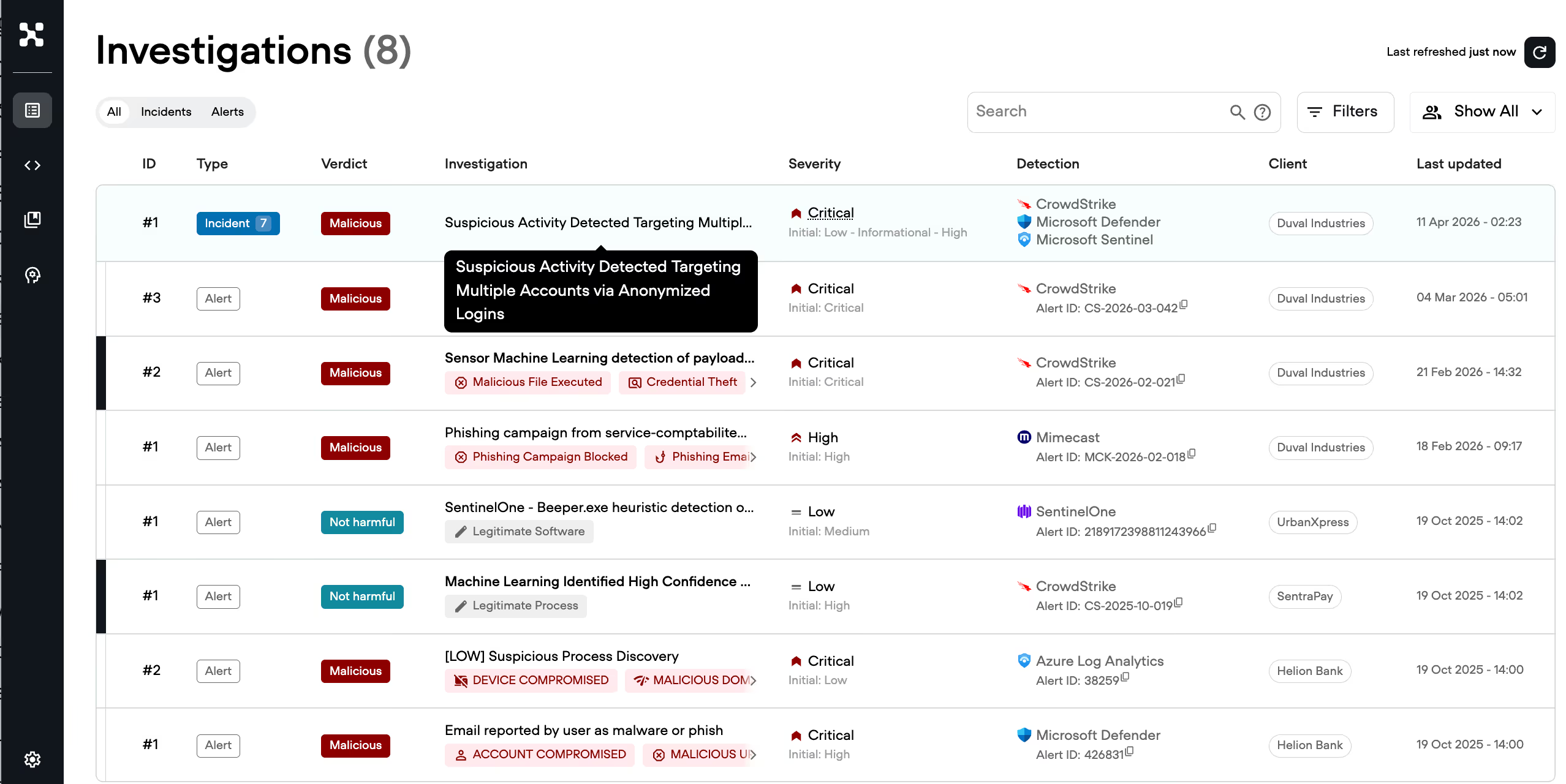
You open Qevlar in the morning, and the first thing at the top of the queue is a Critical incident. That's where the analyst starts.
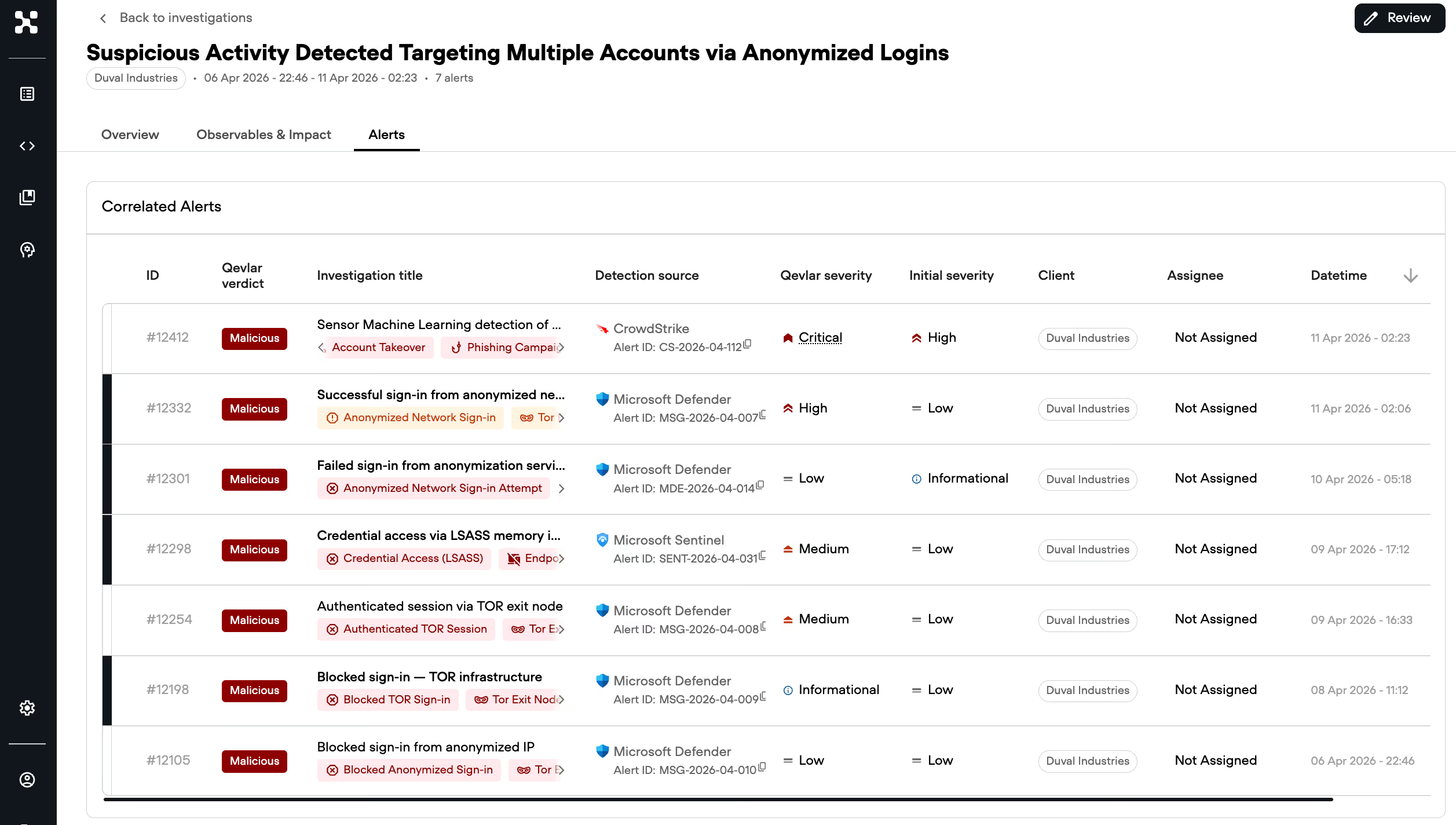
Qevlar grouped 5 identity alerts and 2 endpoint alerts, coming from three different detection sources across identity and endpoint, into a single incident.
The correlation happened because:
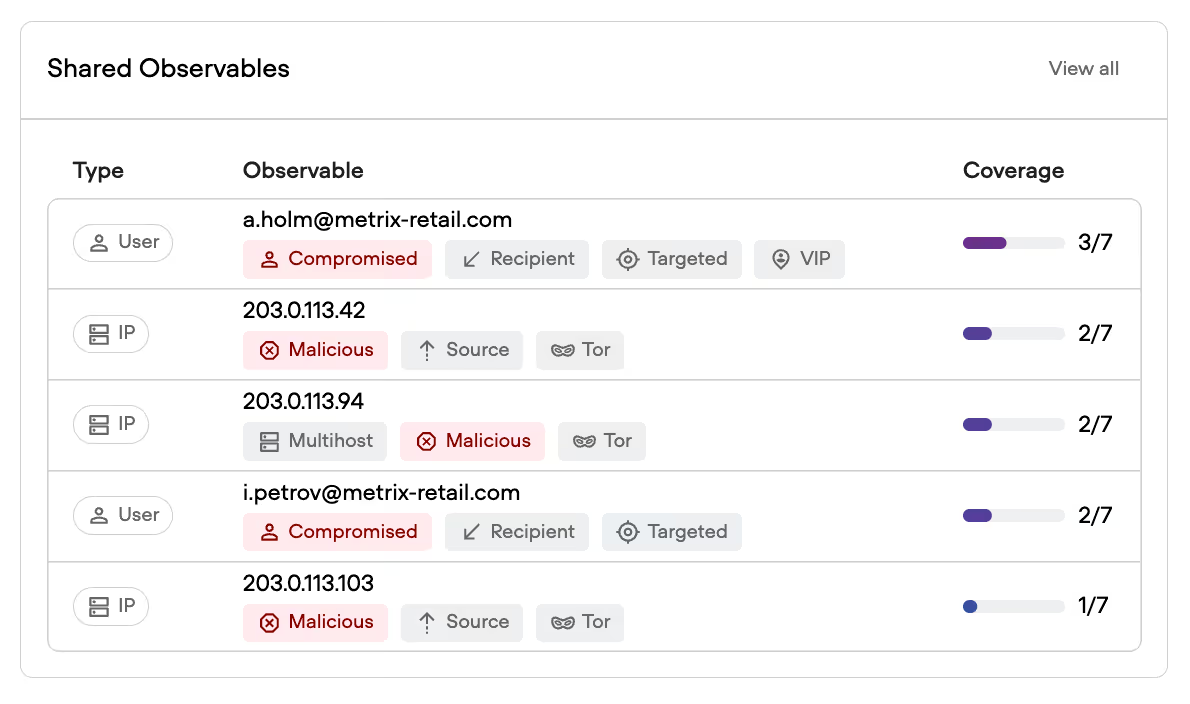
In other words, Qevlar saw the same users, the same time window, and a clean handoff from identity compromise to endpoint compromise.
Qevlar summarizes an attack narrative up-front (and updates it every time a new alert is correlated into the incident).
In this case, between April 6 and April 11, 2026, five login attempts to four distinct accounts originated from TOR exit nodes (MITRE T1078, T1090.003), indicating a coordinated credential-stuffing campaign using anonymized infrastructure to evade detection.
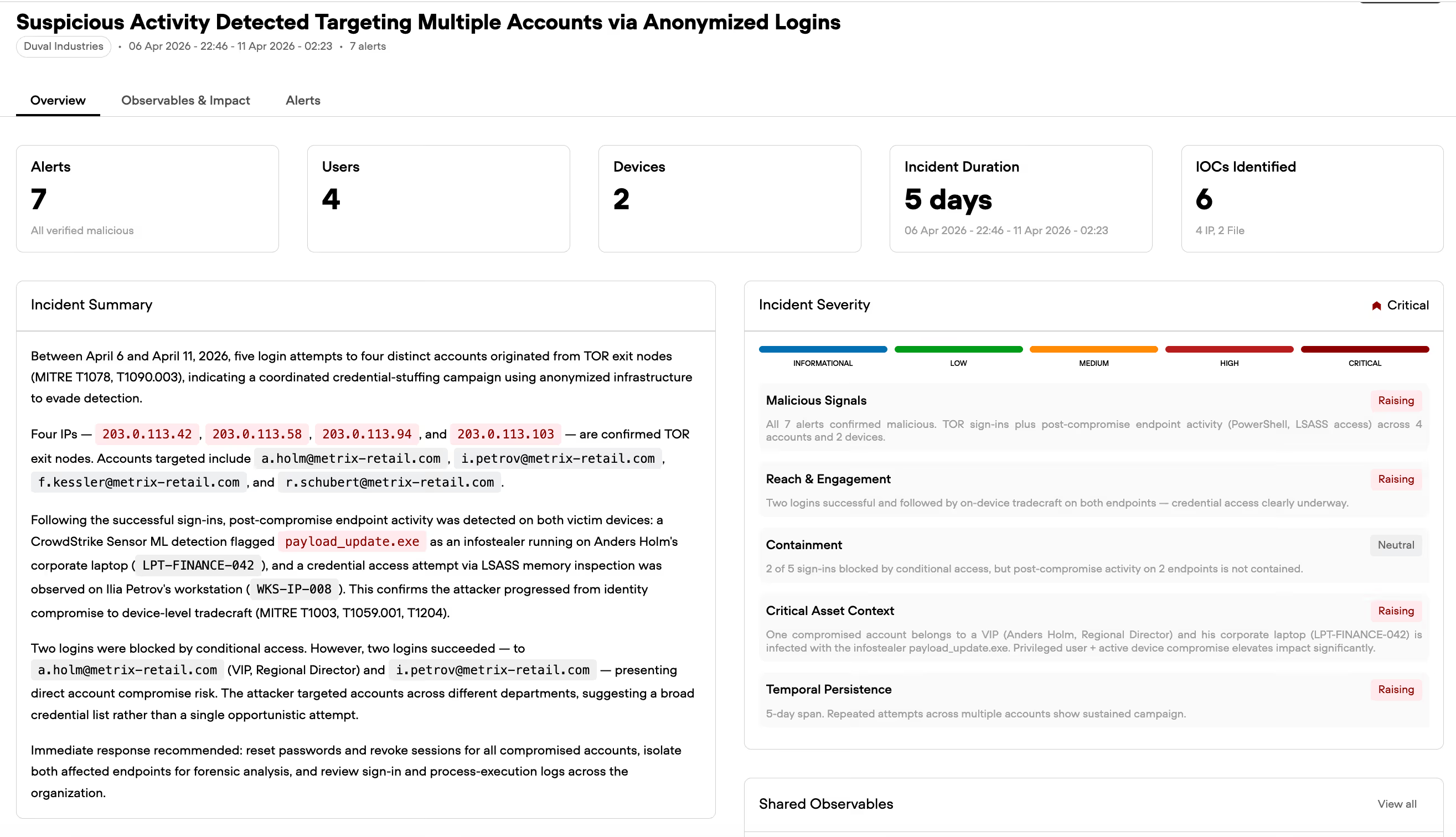
The incident severity is Critical, and Qevlar shows exactly why.
Four of five factors are raising the score, with User and Device Context the one that tips it over the line: one of the compromised accounts is a VIP (Regional Director), and the infostealer is live on his laptop.
None of the seven source alerts on its own would have scored Critical. The incident did, because the score factored in the full picture.
The analyst doesn't have to dig for the blast radius. Qevlar surfaces it directly on the incident page:
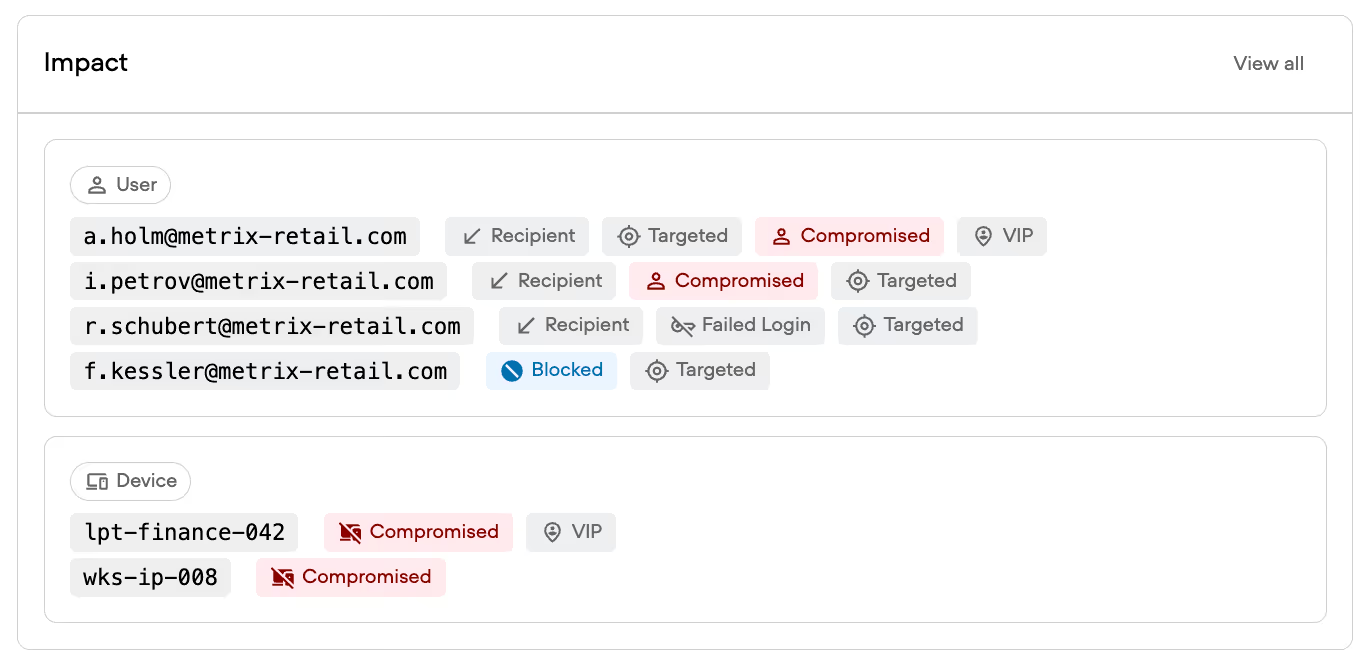
For more comprehensive details, SOC analysts go to the Observables & Impact tab. It's the full IOC inventory for the incident, filterable by type and ready to feed into containment, blocking, or threat-hunting. All 12 observables sit in one view (4 IPs, 4 mailboxes, 2 devices, 2 files), each tagged with both threat context and business context.

If the analyst wants to verify, the seven alert investigations are all one click away from the incident view. Each keeps its own full investigation: which observables were analyzed, which tools and threat intel sources were used, which log queries were executed, and which context items were applied.
.gif)
Already a Qevlar AI customer? Log in to the platform. Incidents are live in your tenant.
Not yet? Book a demo and we'll show you Incidents on a real attack chain in under 30 minutes.

Qevlar correlates alerts it has investigated and concluded as malicious. Benign and informational findings don't make it into an incident. That's the point: incidents are meant to be the prioritized, real things, not another inbox.
Qevlar Incidents is also vendor-agnostic. It works with any Qevlar-supported alert source, and correlation runs on commonalities between observables, so it doesn't matter which tool generated the alert.
Three differences worth knowing:
Two options:
Either way, you're not locked in.
Yes. When Qevlar receives multiple identical alerts for the same entity and alert type within a 12-hour window, it automatically groups them together as repeated alerts. This reduces noise in your investigations queue while preserving full visibility of every alert.