Qevlar AI

Forget scattered notes and lost tribal knowledge. Qevlar Memory lets your SOC team record critical context once and use it everywhere, ensuring fewer false positives, clearer investigations, and faster onboarding for new analysts.

SOC analysts often carry critical context in their heads: what’s normal and what’s not in a particular environment. Think of patterns like:
With Qevlar AI Memory, you can embed this knowledge directly into all relevant investigations.
All you need to do is share information and facts in natural language, and Qevlar will automatically apply them when investigating relevant alerts.
The more context you share, the more accurate your investigation results will be:
✅ Fewer false positives because Qevlar better understands the business specifics of your organization (e.g., VPN usage, internal scanning).
✅ More critical alerts investigated because Qevlar pays attention to your (or your client’s) additional business context (e.g., marking alerts connected with VIP users as malicious for thorough investigations).
Keeping investigation context in one place makes it easier to share knowledge across the team, especially with new teammates or analysts who haven’t worked with certain types of alerts or clients before. With Qevlar Memory, you make this knowledge accessible to everyone on your team.
Put simply, it works like whitelisting, but easier to set up and as granular as you need it to be.
[Entity] is [permitted/not permitted] to [action] in [context/environment].
.avif)
Examples:
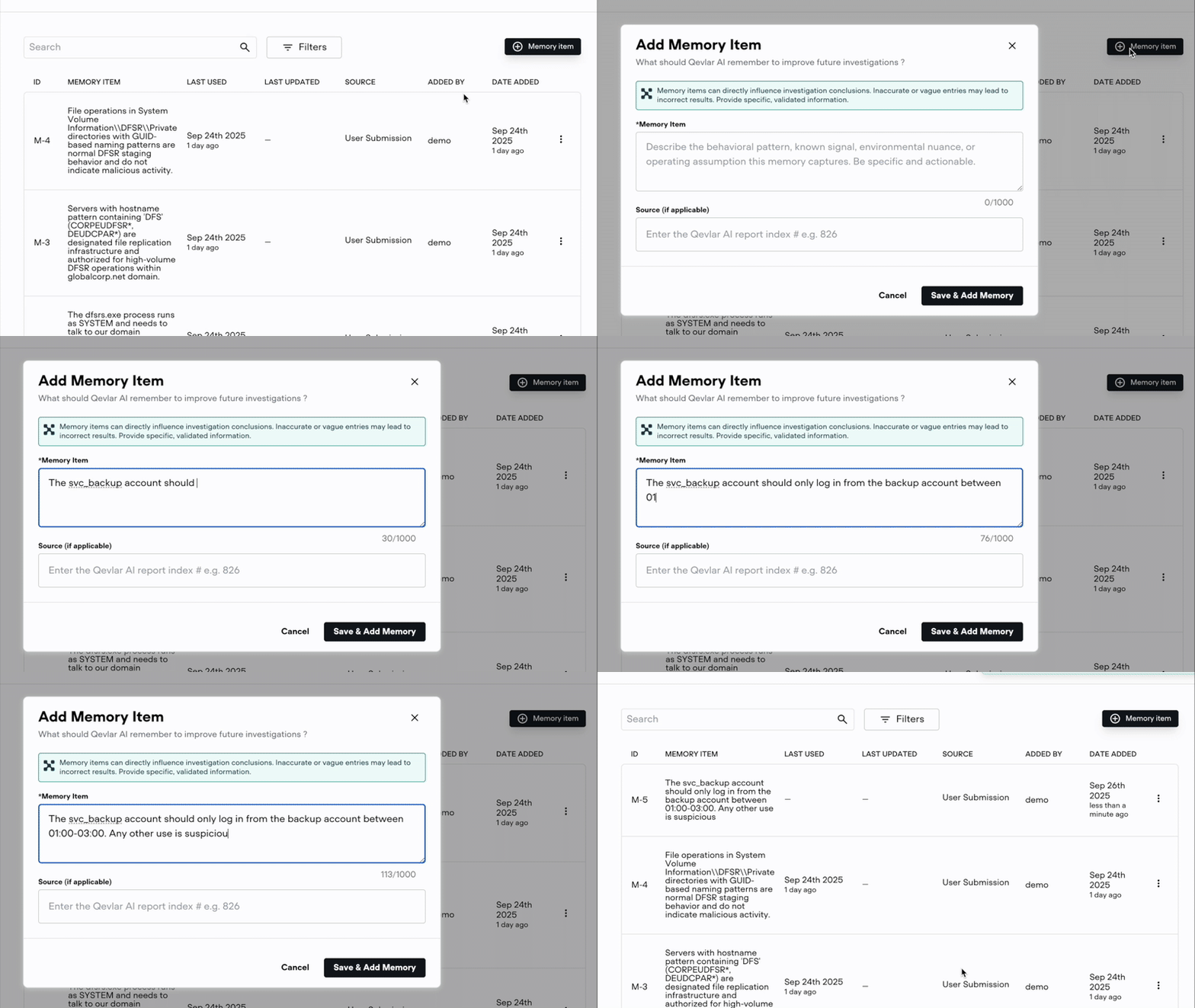
svc_backup account is used exclusively to perform backups every night between 01:00 and 03:00. Any connection with this account outside this time window, or from a machine other than the backup server, should be considered suspicious.You can also create a memory item right from the investigation section:
.avif)
👉 Note for MSSPs: Memory is client-specific and never shared across profiles.
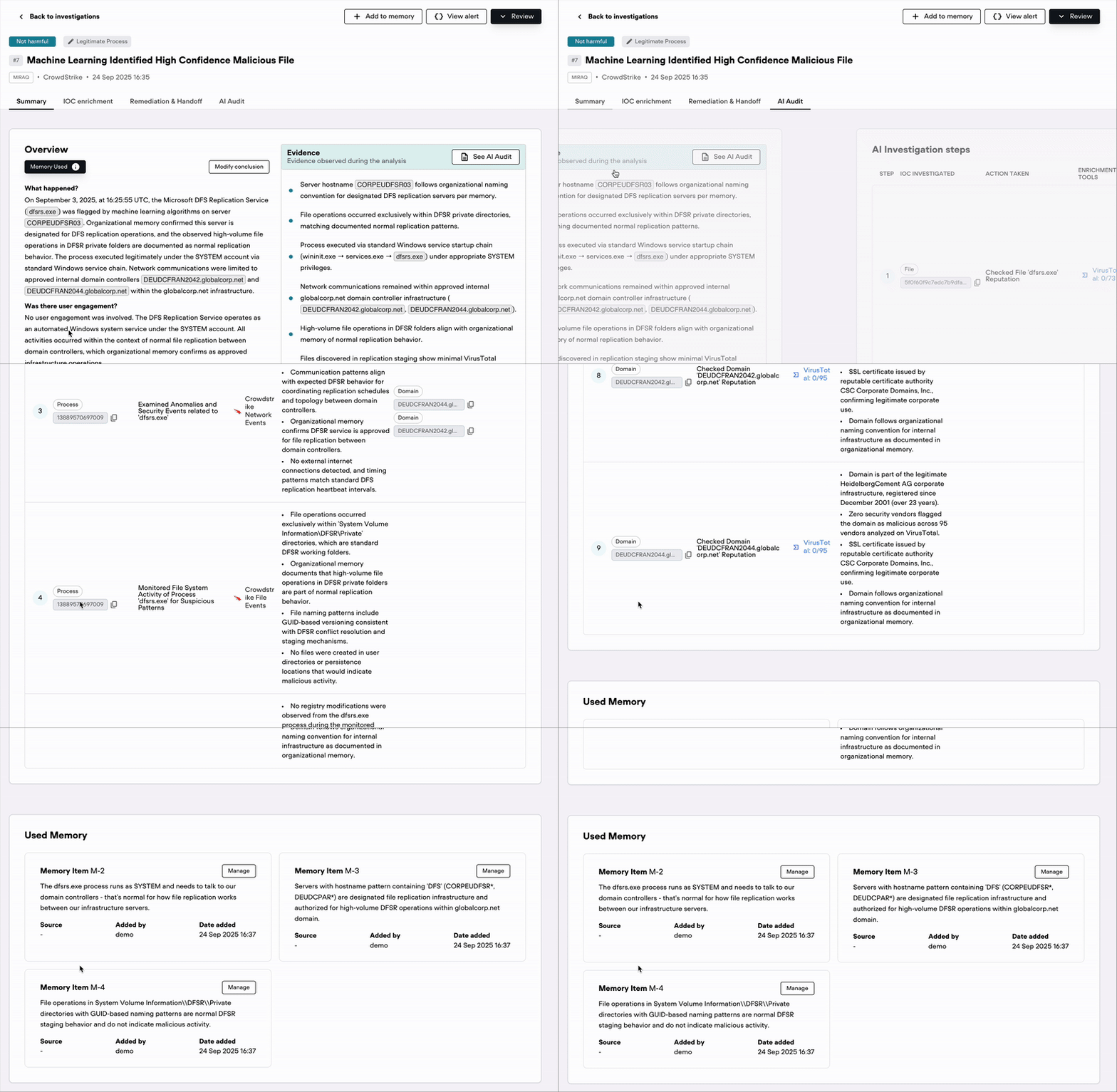
On the Memory overview page, you’ll see when a memory item was last applied to an investigation, indicating that it was recalled and considered by the AI during its analysis.
.avif)
You can also see this in the investigation report: if a memory item was used, you’ll see the tag “Memory Used” in the overview. By clicking on it, you can view all memory items that were considered during the investigation.
💡 Have feedback? Share it with your dedicated Customer Success Manager - we very much value your thoughts!

Write it as a clear statement of what's permitted or not permitted, for which entity, under what conditions, following the pattern "[Entity] is [permitted/not permitted] to [action] in [context]." Crucially, include the boundary that makes it safe: for example, the svc_backup account runs backups nightly between 01:00 and 03:00, and any use outside that window or from another machine should be treated as suspicious. Conditions are what stop a memory item from becoming a blanket exception.
Admin users manage Memory, so context isn't added ad hoc by anyone. That matters because a memory item shapes how future verdicts are reached, so it should be a deliberate, owned entry rather than an offhand note. You can also create an item directly from an investigation, and if it comes from a past case you can attach the Qevlar Investigation ID as the source, which records why the rule exists for whoever reviews it later.
Yes. The Memory overview page shows when each item was last applied, meaning the AI recalled and considered it during analysis. Inside an investigation report, a "Memory Used" tag appears in the overview, and clicking it lists every memory item the AI weighed. That auditability lets you confirm context is being used as intended and spot items that may be stale or never triggered.